Fractals
-

Example 9.5 – 3D Cantor Set
A recent source of inspiration has been some of the work done by the developer of a procedural world generator Miguel Cepero of Voxel Farm/Voxel Studio and documented at his blog Procedural World. I’ve recently experiment with a few different grasshopper scripts based on some of the concepts he discusses, and I wanted to show…
-
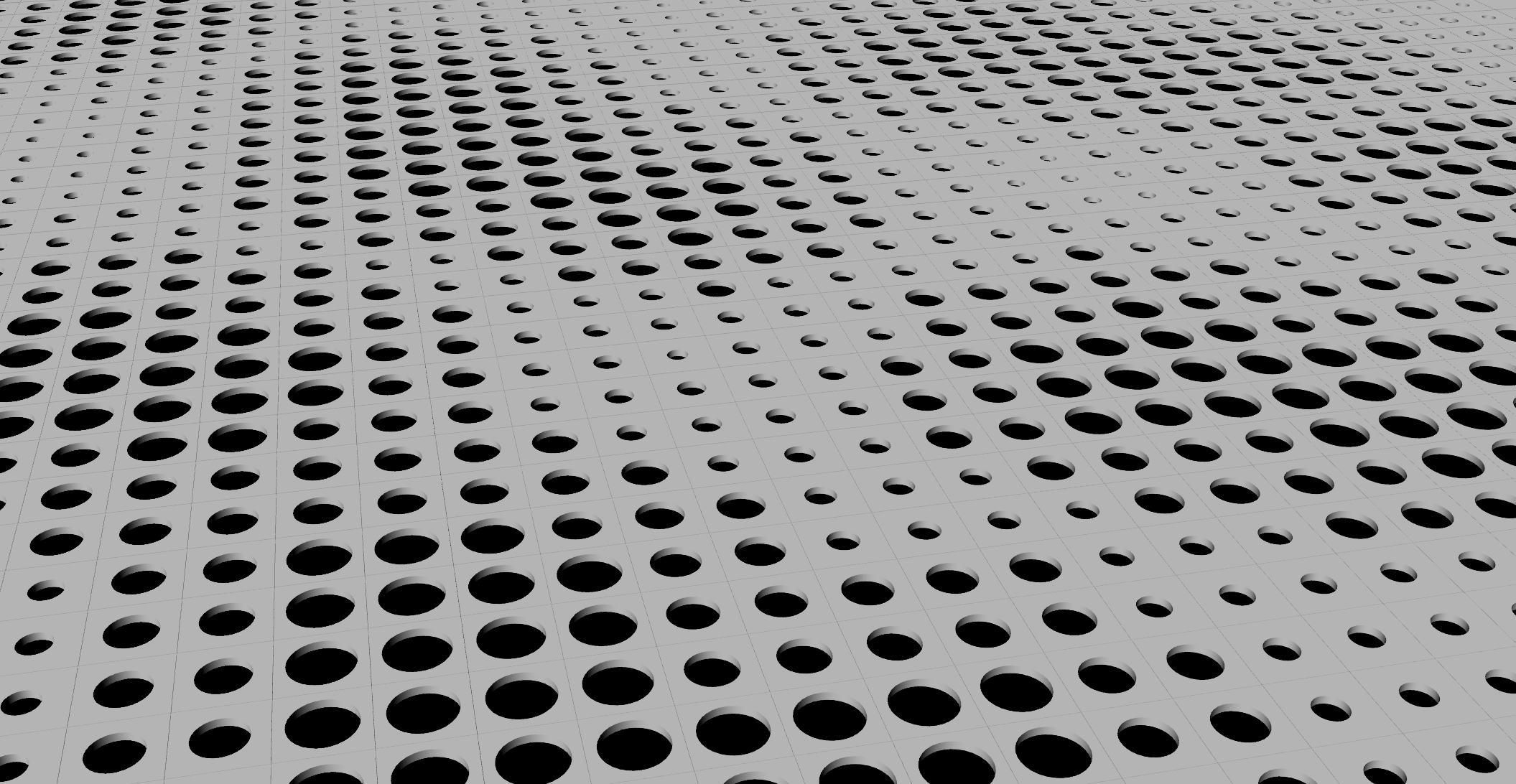
Keio University Roof Garden – Michel Desvigne – Case Study 02
One of the most interesting landscape architects from the past 20 years is the French Designer Michel Desvigne. His approach to design and form is very contemporary, and he would generally be considered in the avante-garde of the field. He deals with and talks about issues of mathematical complexity, emergent form, intermediacy/in-determinancy, as well as…
-
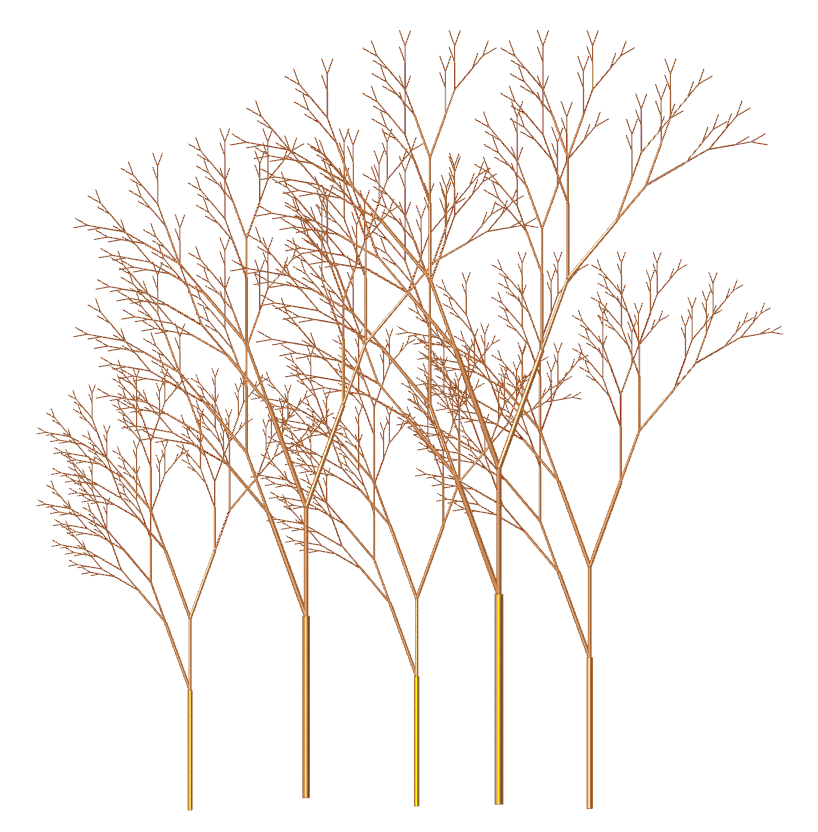
Fractal Trees – Basic L-System- Example 9.4
Another very useful application for fractal processes is to create 3D vegetation for your models. There are several very good commercial products which use algorithms to create plants, which combine mathematical understanding with botanical knowledge to make tree and plant generators. Two popular products that I have a little experience with are Xfrog and Laubwerk (now…
-
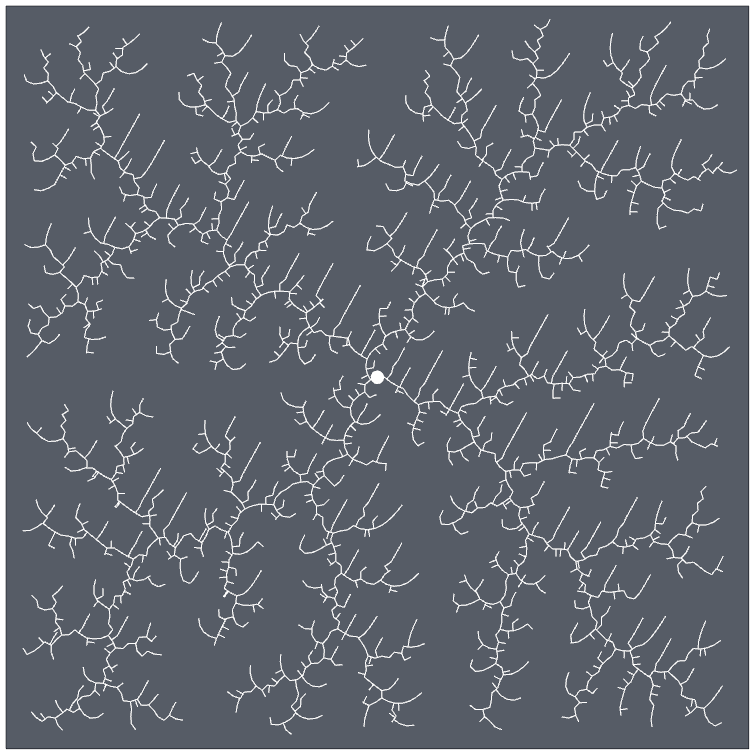
Diffuse Limited Aggregation Structure – Example 10.2
A fairly useful and simple fractal growth process that can be used for modeling natural structures is known as the Diffuse Limited Aggregation algorithm. Many growing structures in nature follow this logic, from colonies of bacteria to cities! A fairly good description of this process can be found here, where the particles undergo what is…
-

Generating Fractal Terrain using the Midpoint Displacement Algorithm – Example 9.3
While not typically something used by landscape architects, many Computer Generated Landscape artists use procedural world generation software to create landscapes that have no basis in actual, real world landscapes, but can look astonishingly life-like. Employing the logic and algorithms of some of these “world creators” could be useful for landscape representation, and maybe even…
-
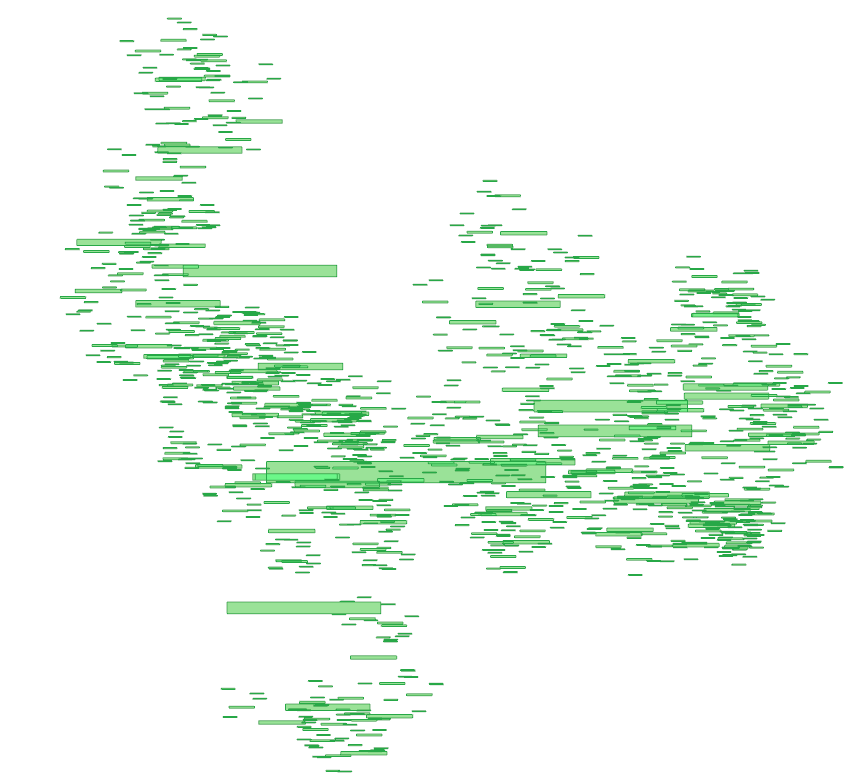
Multiply and Scale Geometry using Fractal Methods – Example 9.2
This second script also demonstrates fractal behavior with self-similarity through scales and recursion. The premise is fairly simple. It takes a piece of geometry, a circle, rectangle, blob, etc. and in each recursion makes a certain number of copies of the geometry, sends it off in random directions, and then scales it down. The first three results of…
-
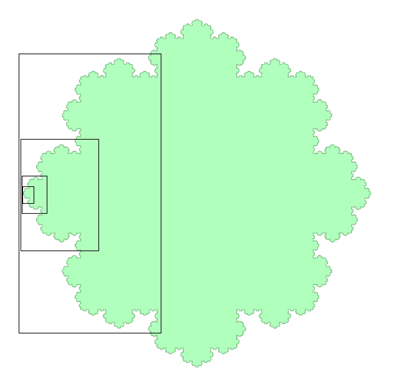
Basic Fractal Generator – Example 9.1
Before getting into some more complicated and more interesting fractal patterns, I wanted to show this fairly simple example to demonstrate what a fractal pattern is in theory. This script also might be helpful for “softening up” a drawing and making ugly lines warm and fuzzy like plants. The reason this works is because plants,…