Random 2D Pattern
-
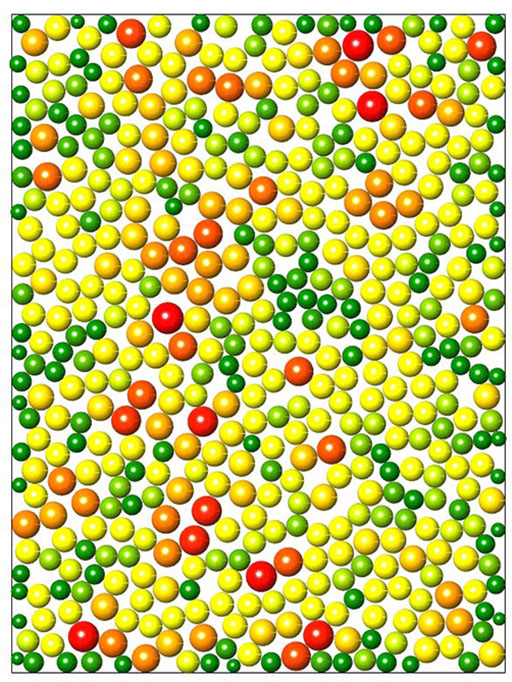
Circle Packing with a Voronoi Diagram
When studying geometries and patterns in natural systems, eventually you will probably stumble across what is known as the Circle Packing Problem. Like many formal arrangements discussed on this blog, my first introduction to this problem was again through Phillip Ball’s series Nature’s Patterns: A Tapestry in Three Parts where he notes the optimal arrangement…
-

Pattern Derived from George Nees’ Schotter – Example 22.2
One of the most famous pieces of digital art is also one of the first, Georg Nees’ Schotter (German for ‘Gravel’) was produced in 1965, years before digital displays and monitors made it possible to see what was being produced. Instead, Schotter would have been programmed by Nees and only made visible once sent to…
-

Cave Cellular Automaton – Algorithm 12.3
I’ve already posted a few examples of Cellular Automata but in hindsight, some of them were a bit complicated especially for those who don’t have any prior experience with this computational paradigm. I have a few more even more complicated ones I want to highlight in future blog postings, but I thought it might be useful to…
-

Pattern based on Vera Molnár’s (Dés) Ordres Series (1974) – Algorithm 21.01
Generative or Algorithmic Art goes back to the very earliest days of computer graphics and some of the key pioneers of this movement produced work before computer screens were even a thing. It was necessary for them to come up with a clear logic, program an algorithm, and hope for the best when the plotter…
-
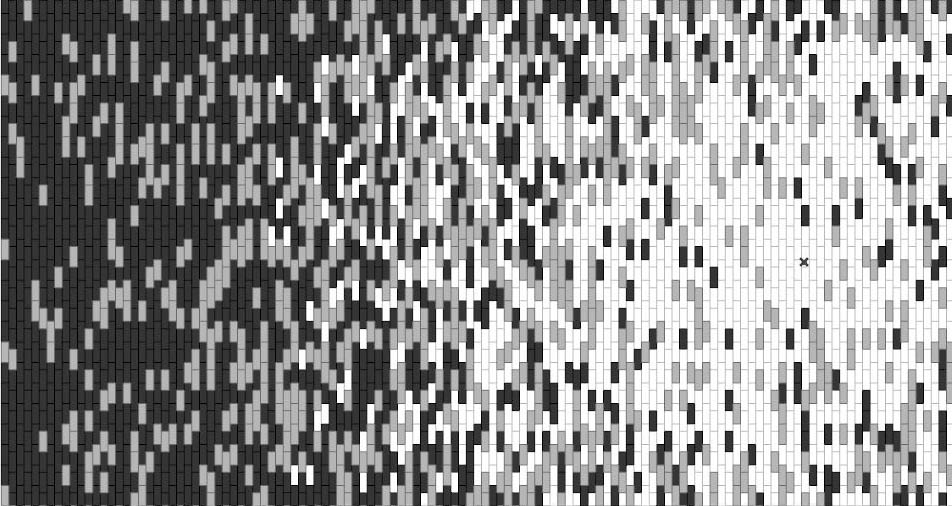
Købmagergade, Copenhagen – Karres en Brands – Case Study 3
This example is inspired by a project by the Dutch Landscape Architecture Firm Karres en Brands in Copenhagen, Denmark, the pedestrian street Købmagergade. I saw the project in its initial stages during a visit in 2009 but haven’t yet seen the final results. The concept is fairly simple. The designer wanted to create an effect…
-
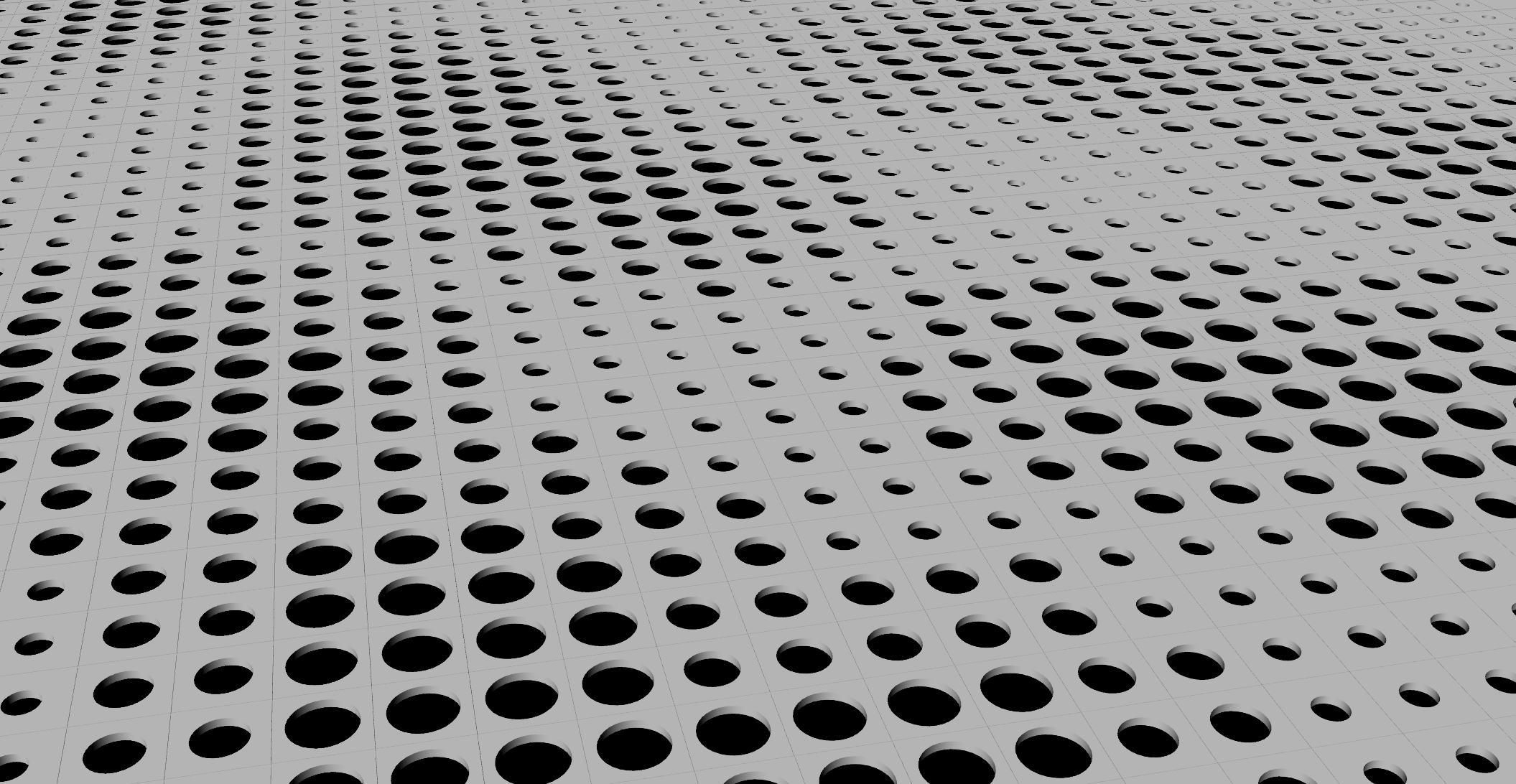
Keio University Roof Garden – Michel Desvigne – Case Study 02
One of the most interesting landscape architects from the past 20 years is the French Designer Michel Desvigne. His approach to design and form is very contemporary, and he would generally be considered in the avante-garde of the field. He deals with and talks about issues of mathematical complexity, emergent form, intermediacy/in-determinancy, as well as…
-

Random Walk – Example 10.1
This is an example of a structure that grows through a simple process known as a “Random Walk.” These random walks have several applications in scientific modeling, for example ecosystems, and even financial markets. A random walk also approximates (but not exactly) a scientific phenomenon known as Brownian Motion, which uses much more complex mathematics,…
-
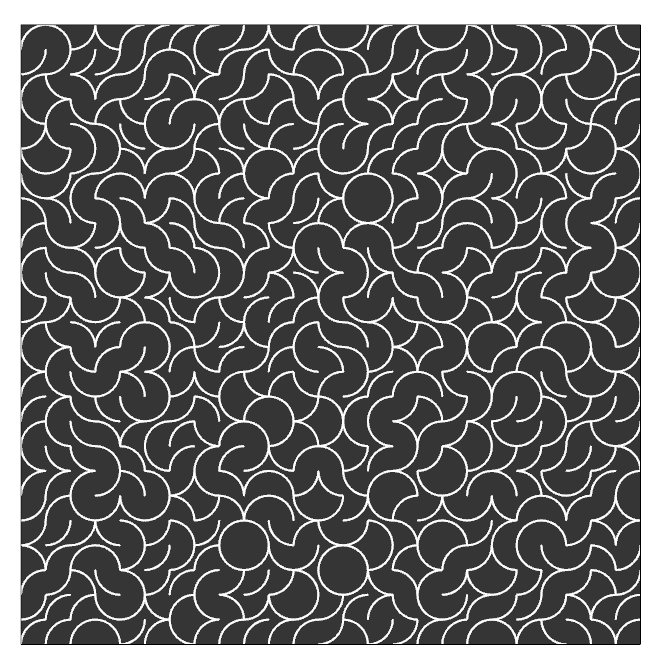
Complex Pattern from Simple Arcs – Example 3.6
Just to demonstrate one more time how complex patterns can be developed from very simple initial forms, we are going to do what we did in example 3.5 and do a Pick n’ Choose, this time with just one arc rotated in 1 of 4 directions. The results look quite good, in my opinion, even though its…
-
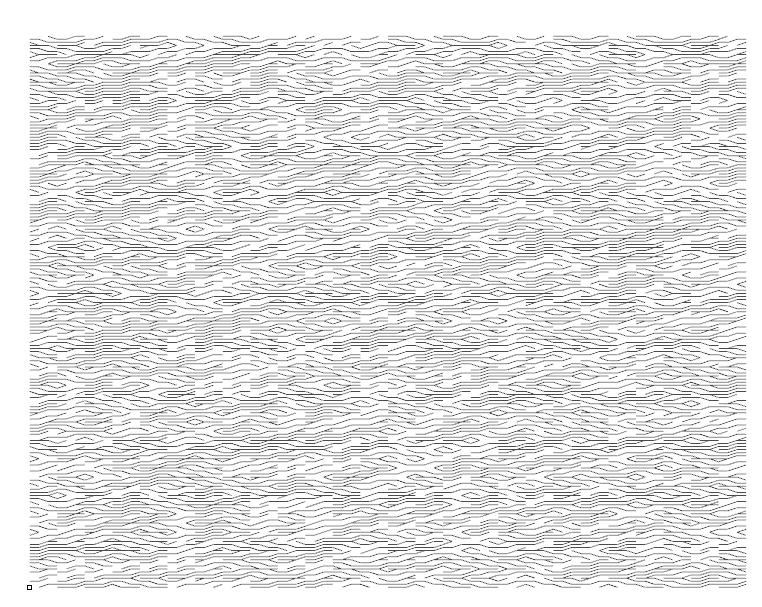
Complex pattern from Simple Tiles – Example 3.5
You don’t need to produce all your geometry in Grasshopper as in the previous examples. It is often more productive to draw things statically in Rhino and then have them processed in Grasshopper. A simple module can be endlessly deformed in Grasshopper which is the basis of many designs you see coming out of people’s…