Simulating Natural Systems
-

Meander Space Colonization – Algorithm 13.1
I just published a few days back an introduction to a series of ‘space colonization’ algorithms. The term sounds a bit sexier than it is, evoking images of bases on Mars and interstellar travel, but actually it just means connecting a cloud of random points into a network using one or a combination of specific…
-

Networks and Space Colonization
*This post reproduces content from Chapter 8 of my doctoral thesis and serves as an introduction to several forthcoming ‘space colonization’ algorithms. The first of these the meander is now available, with some others coming soon! In Harvard-trained architect Peter Steven’s 1974 book Patterns in Nature, the author proposed that in 2- and 3-dimensional physical…
-

Water runoff script – Example 8.6
In example 4.1 I mentioned a custom VB component I had used to analyze the flow of water across a surface. I recently tried to recreate this using the Anemone looping component to use with meshes (for various reasons) and it was actually very easy to do. The logic is similar in some ways to…
-
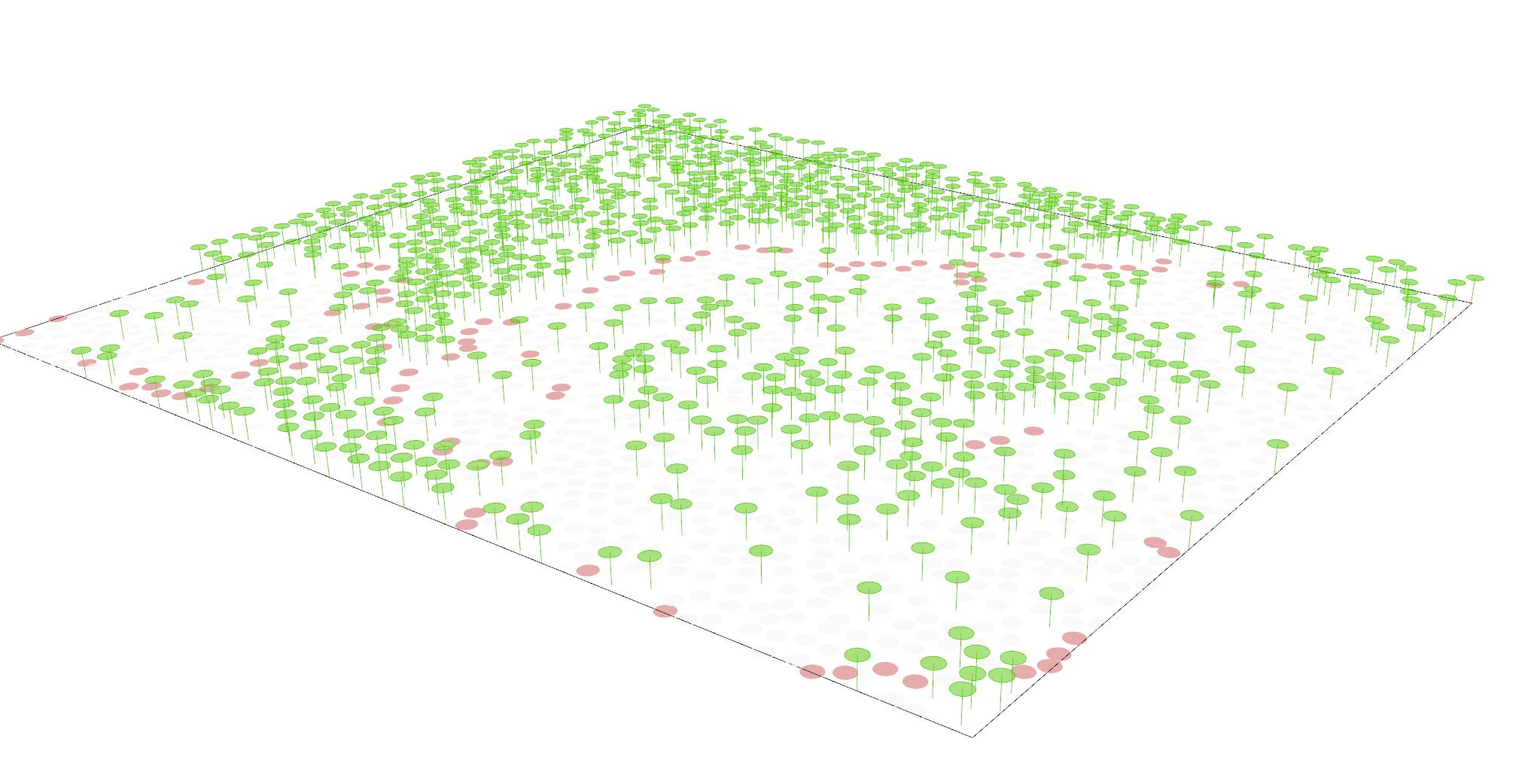
Disturbance Cellular Automata – Example 12.2
Cellular Automata are used in many applications to understand and simplify complex natural phenomena. Sand dunes, braided river networks, and ecosystems are just a few of the things that authors have attempted to translate into simple rules and which in the end generate complex results. This script is based on a well-known cellular automata known…
-
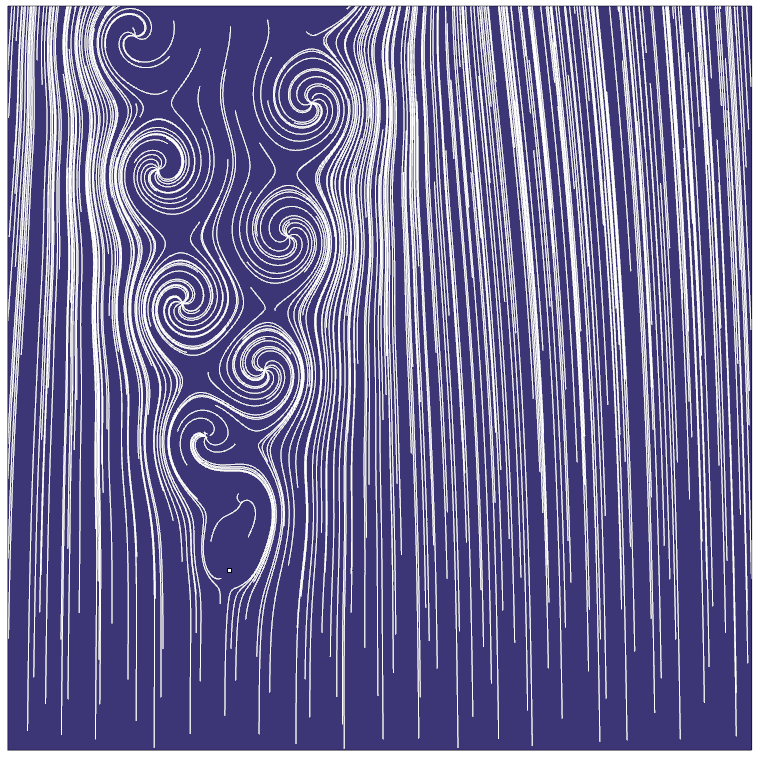
Example 7.4 – Kármán Vortex Street – Spiral Forces
A last major category of forces you can use in the Grasshopper Vector Field Tools are spiral / vortex forces. There isn’t a special component for these, but they are created by simply combining and merging fields for point charges together with a spin force. The result is a vortex. This is fairly easy to…
-
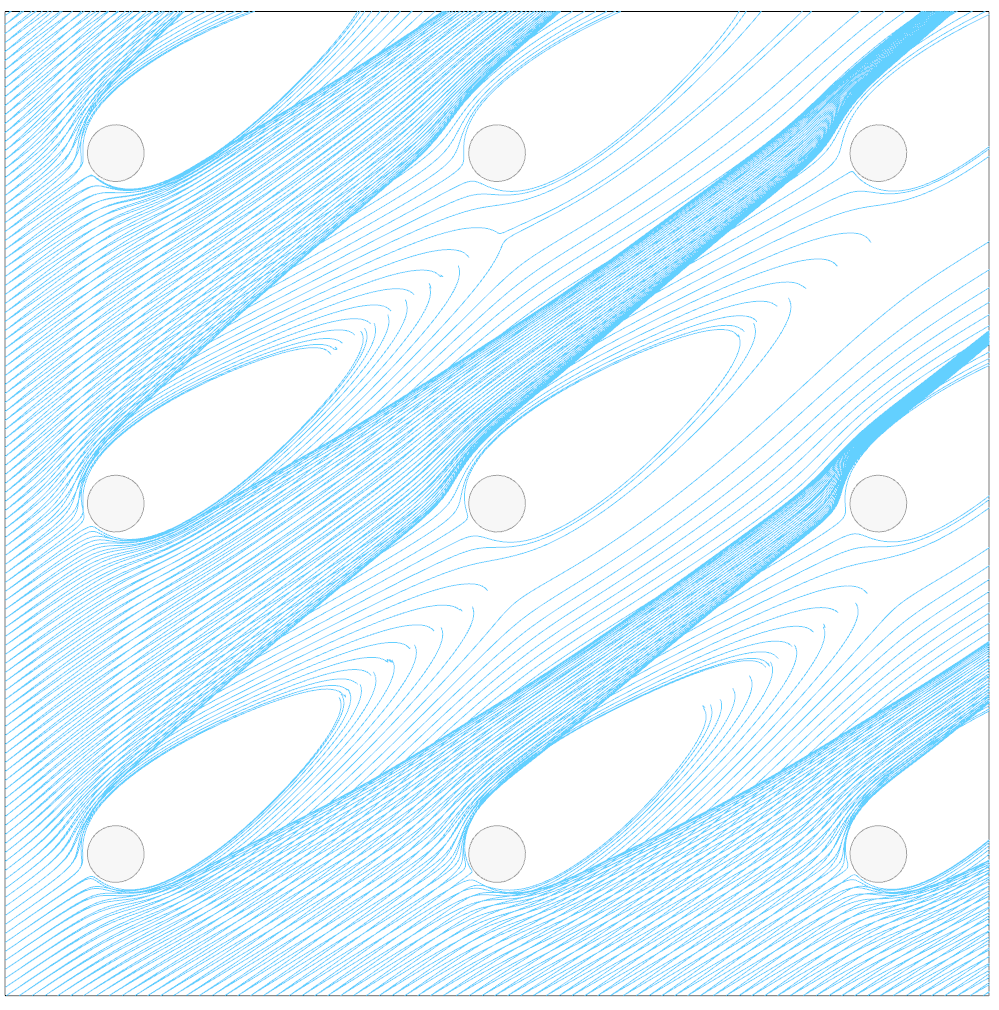
Example 7.3 – Line and Vector Forces combined with Point Charges
The previous vector field examples looked at patterns with Point Charges and with Spin Forces. In this next example, I will look at two additional basic forces in the Grasshopper Field Components set. These are Line Charges, which act similar to point charges, but act along an entire line instead, and the Vector Force, which…
-
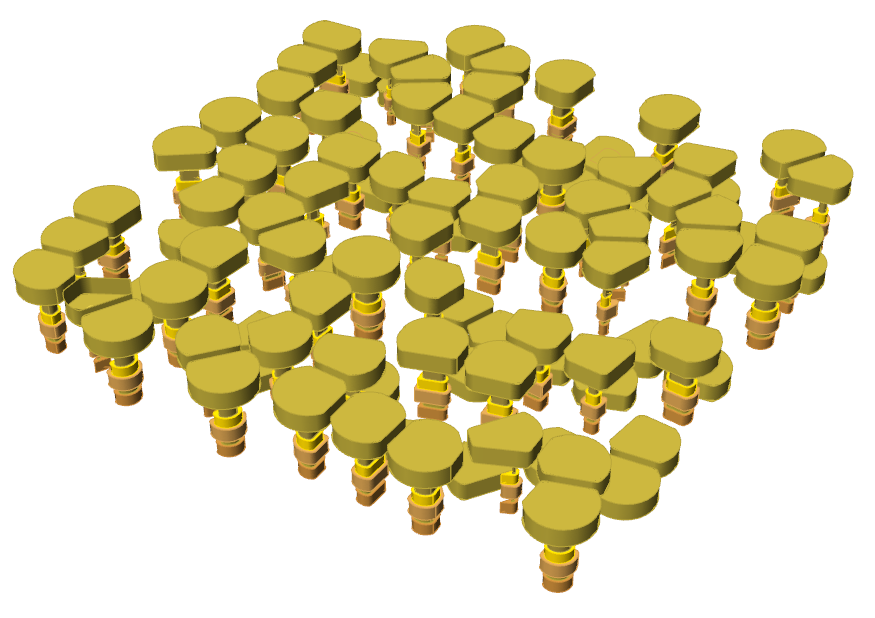
A simple model of a Natural Process – Example 5.4
One of the things I’ll mention a lot in this blog is that complex geometry and form usually comes from pretty simple rules, with an element of controlled “randomness” applied. This example might be one of that. And you probably would never actually build a landscape like the one I am showing here (unless you work…
-
Orienting and Non-Uniform Scale (Sand Dunes) – Example 5.3
This is another script that uses orienting geometry to create forms, and if you were able to figure out Example 5.2 this one should be pretty easy. It uses orients a piece of geometry which is scaled along a curve, in this case using a non-uniform scale mechanism, and then the resulting geometries along each curve are…