Anemone
-

Meander Space Colonization – Algorithm 13.1
I just published a few days back an introduction to a series of ‘space colonization’ algorithms. The term sounds a bit sexier than it is, evoking images of bases on Mars and interstellar travel, but actually it just means connecting a cloud of random points into a network using one or a combination of specific…
-

Networks and Space Colonization
*This post reproduces content from Chapter 8 of my doctoral thesis and serves as an introduction to several forthcoming ‘space colonization’ algorithms. The first of these the meander is now available, with some others coming soon! In Harvard-trained architect Peter Steven’s 1974 book Patterns in Nature, the author proposed that in 2- and 3-dimensional physical…
-

Cave Cellular Automaton – Algorithm 12.3
I’ve already posted a few examples of Cellular Automata but in hindsight, some of them were a bit complicated especially for those who don’t have any prior experience with this computational paradigm. I have a few more even more complicated ones I want to highlight in future blog postings, but I thought it might be useful to…
-

Example 9.5 – 3D Cantor Set
A recent source of inspiration has been some of the work done by the developer of a procedural world generator Miguel Cepero of Voxel Farm/Voxel Studio and documented at his blog Procedural World. I’ve recently experiment with a few different grasshopper scripts based on some of the concepts he discusses, and I wanted to show…
-
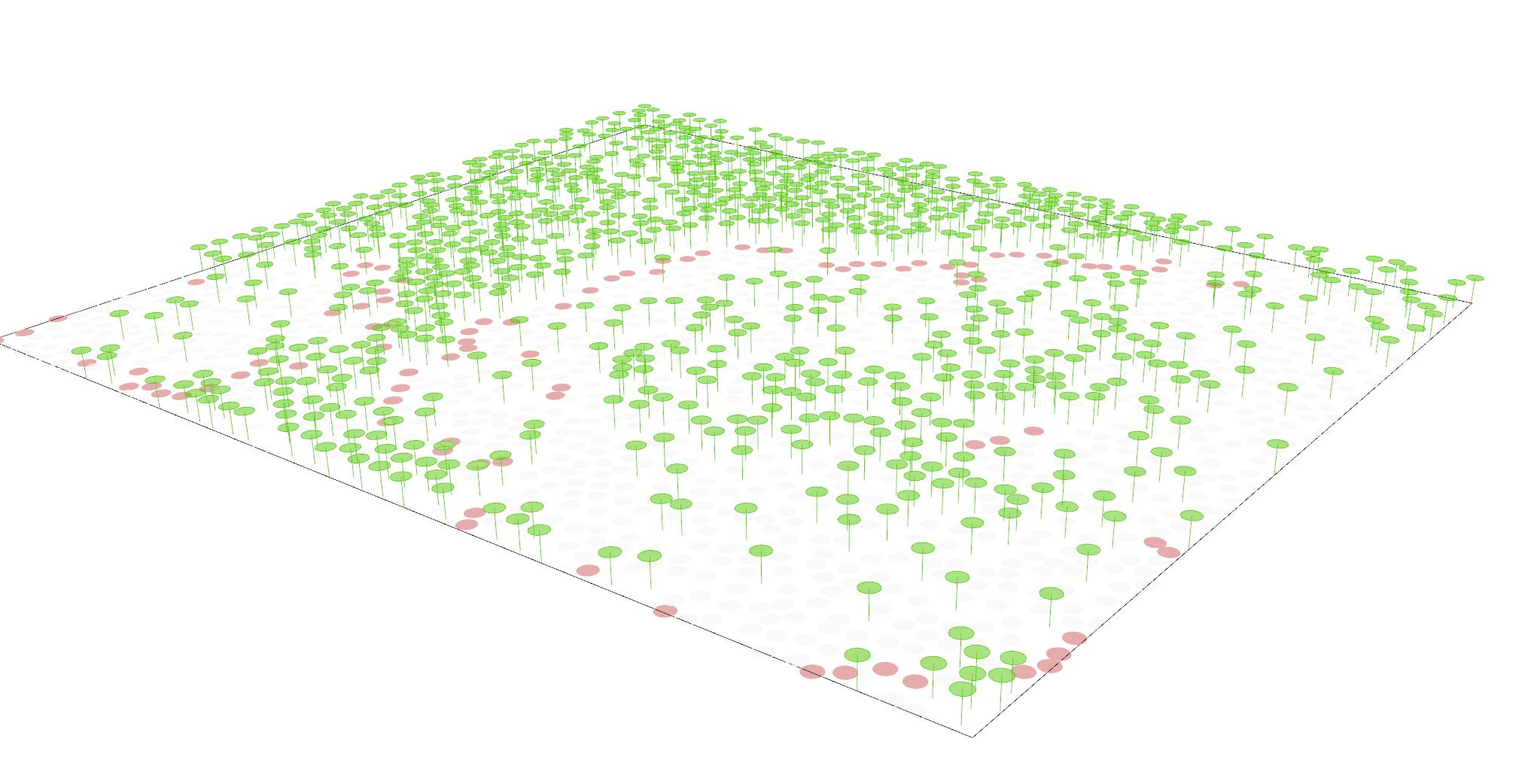
Disturbance Cellular Automata – Example 12.2
Cellular Automata are used in many applications to understand and simplify complex natural phenomena. Sand dunes, braided river networks, and ecosystems are just a few of the things that authors have attempted to translate into simple rules and which in the end generate complex results. This script is based on a well-known cellular automata known…
-
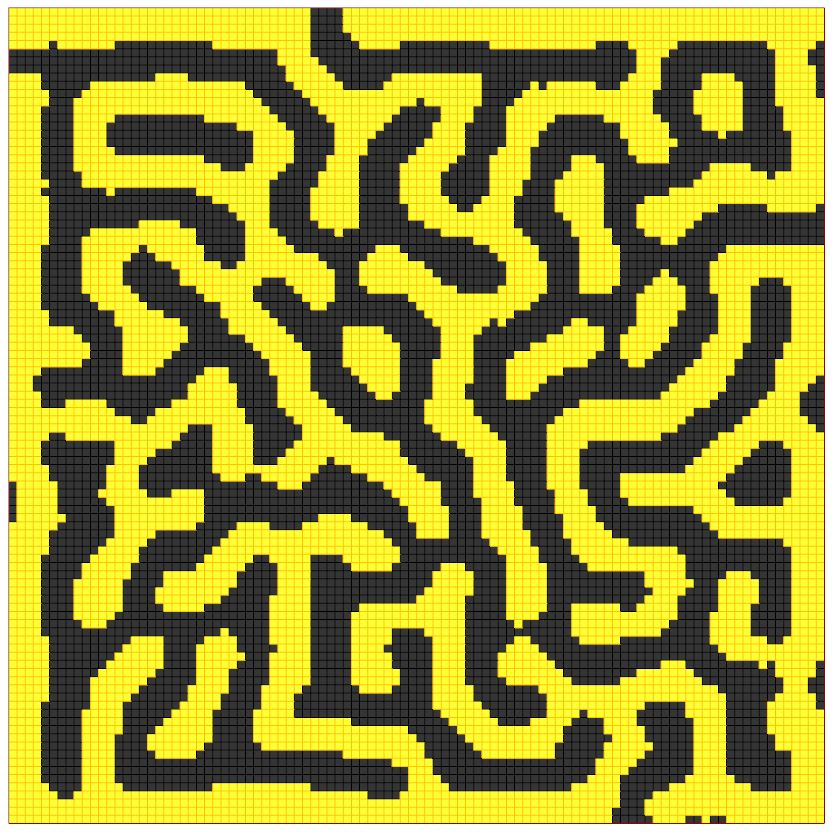
Activator Inhibitor “Fur” Pattern – Example 12.1
This is the first example I am showing based on a family of algorithms known as Cellular Automata. I will not write too much here about the theory of a cellular automaton, you can read the Wikipedia page or google the term if my basic explanation doesn’t make sense, but Cellular Automata have 1 –…
-
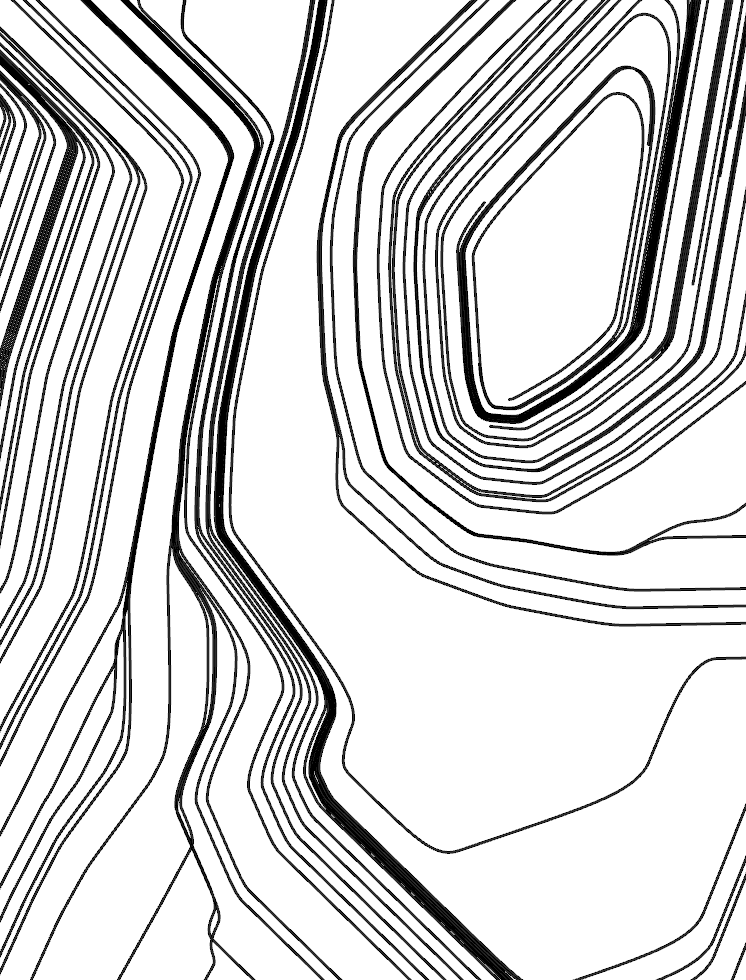
Agent Movement Using User Drawn Vectors – Example 11.3
This last example of using Agents steered by a static vector field continues the logic started in Example 11.1 and further developed in Example 11.2. In those examples, we used a rather consistent Vector Field with vectors generated by Grasshopper itself to steer the agents. There is no reason, however, why you cannot set the…
-
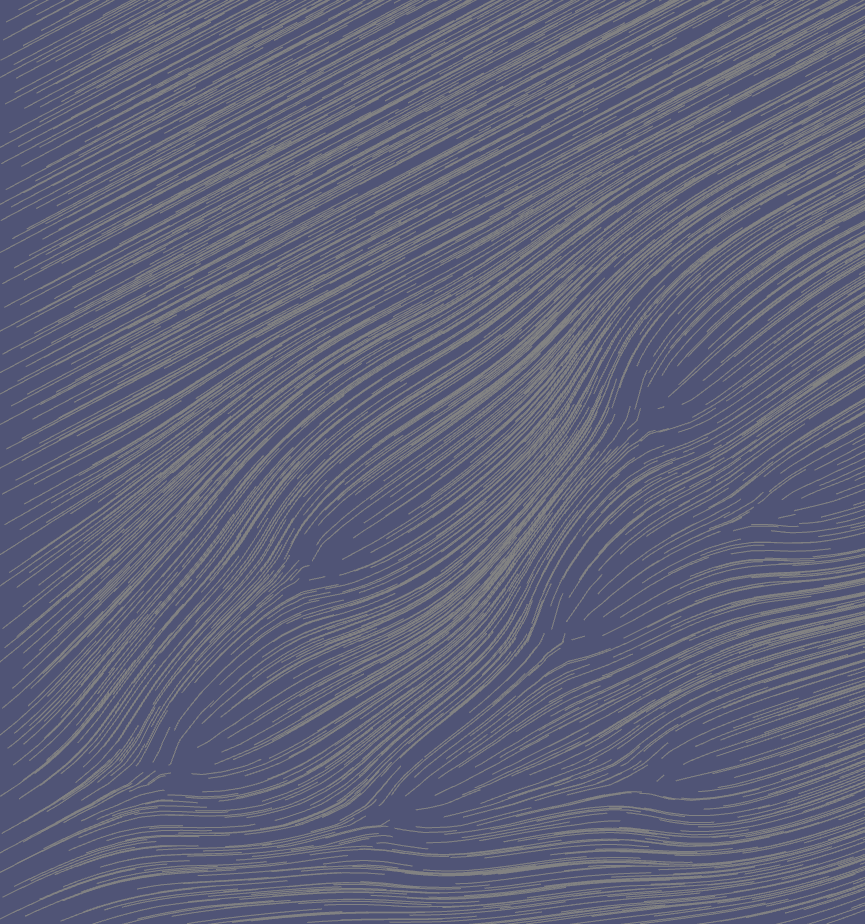
Agents Steered by a Vector Field – Example 11.1
One very much talked about method for contemporary form making proposes uses “Agent” behavior to structure designs, although successful applications of this seem few and far between, especially in “built” projects. Agents are, to generalize, anything that moves in the environment, and changes its behavior, or movement, based on things happening in the environment. Agents can be…
-
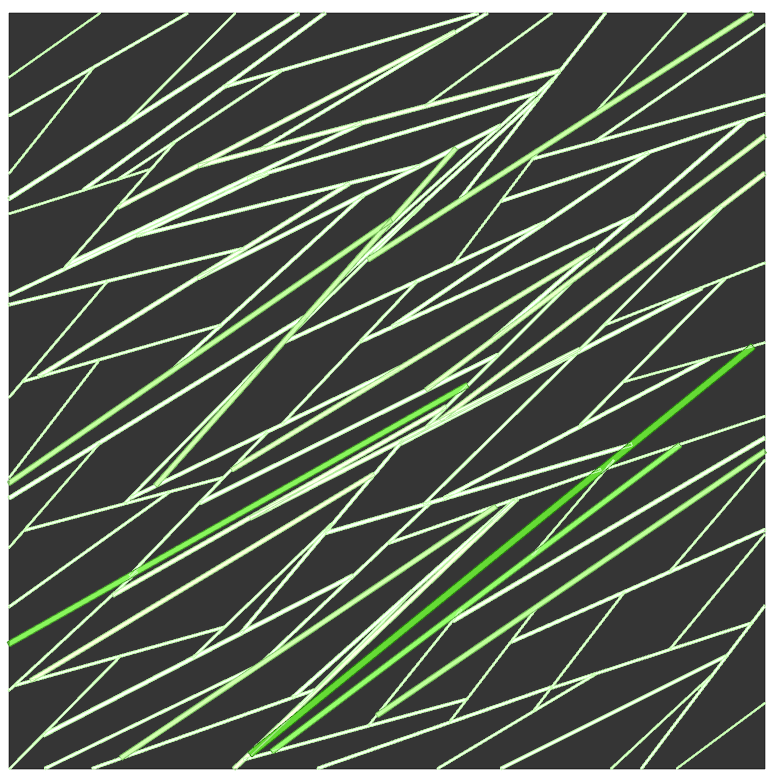
Pattern Created from Growing Lines – Example 10.3
Another way to approach growing structures using Grasshopper and the looping Anenome add-on is to incrementally change geometry until a certain condition is met. In this example, I will take a series of lines initially oriented in random or semi-random directions, and then extend them a small increment in each “round”, until they hit another line,…