Anemone
-
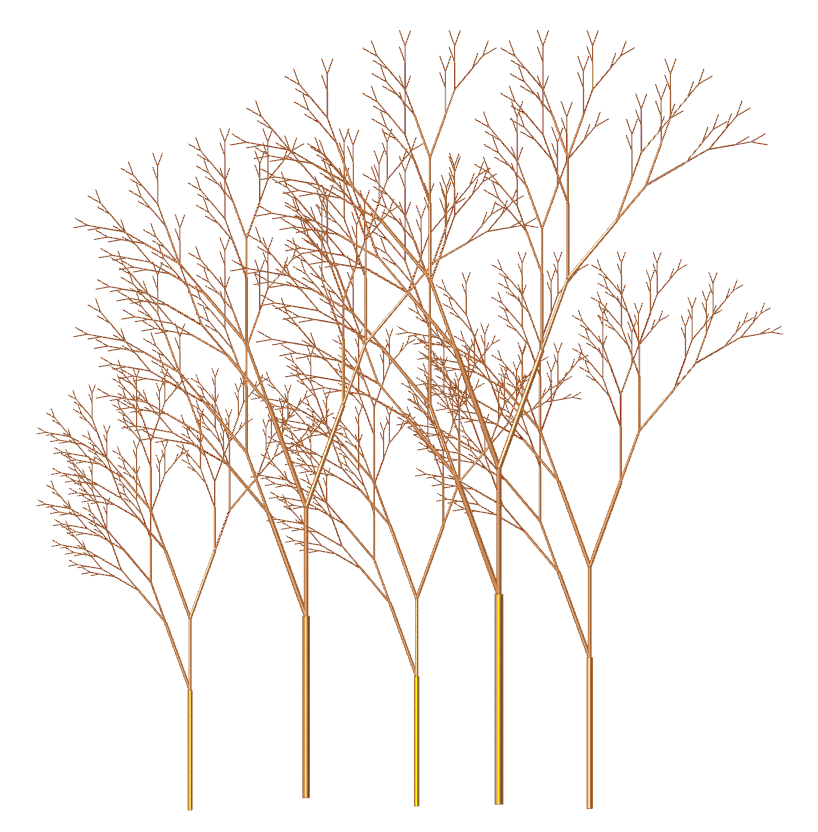
Fractal Trees – Basic L-System- Example 9.4
Another very useful application for fractal processes is to create 3D vegetation for your models. There are several very good commercial products which use algorithms to create plants, which combine mathematical understanding with botanical knowledge to make tree and plant generators. Two popular products that I have a little experience with are Xfrog and Laubwerk (now…
-

Random Walk – Example 10.1
This is an example of a structure that grows through a simple process known as a “Random Walk.” These random walks have several applications in scientific modeling, for example ecosystems, and even financial markets. A random walk also approximates (but not exactly) a scientific phenomenon known as Brownian Motion, which uses much more complex mathematics,…
-
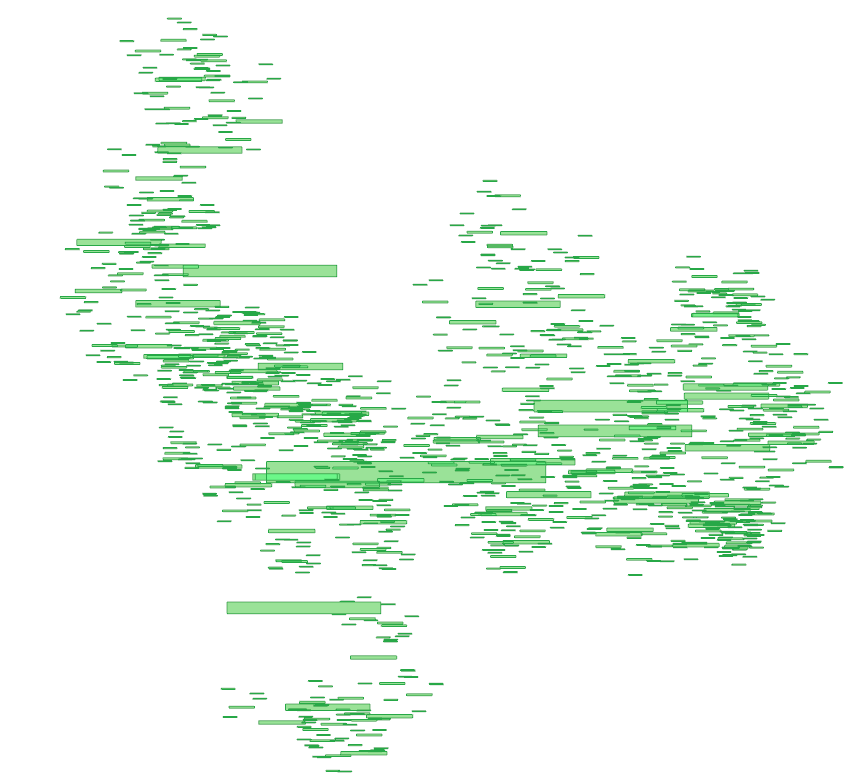
Multiply and Scale Geometry using Fractal Methods – Example 9.2
This second script also demonstrates fractal behavior with self-similarity through scales and recursion. The premise is fairly simple. It takes a piece of geometry, a circle, rectangle, blob, etc. and in each recursion makes a certain number of copies of the geometry, sends it off in random directions, and then scales it down. The first three results of…
-
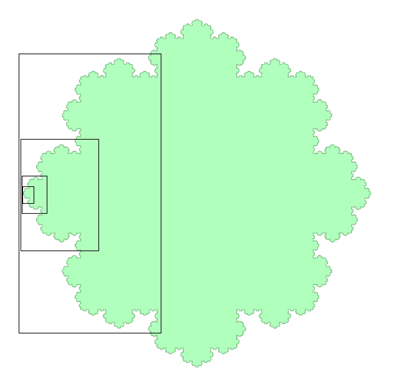
Basic Fractal Generator – Example 9.1
Before getting into some more complicated and more interesting fractal patterns, I wanted to show this fairly simple example to demonstrate what a fractal pattern is in theory. This script also might be helpful for “softening up” a drawing and making ugly lines warm and fuzzy like plants. The reason this works is because plants,…