Procedural Art
-

Pattern Derived from George Nees’ Schotter – Part II
We are continuing with an interpretation of Georg Nees’ Schotter from the previous example and are going to now introduce random ‘jitter.’ If you understood the data structure logic from the previous example and how to apply a jitter from Example 1.3, this is something you should be able to easily do yourself. If you…
-

Pattern Derived from George Nees’ Schotter – Example 22.2
One of the most famous pieces of digital art is also one of the first, Georg Nees’ Schotter (German for ‘Gravel’) was produced in 1965, years before digital displays and monitors made it possible to see what was being produced. Instead, Schotter would have been programmed by Nees and only made visible once sent to…
-

Pattern based on Vera Molnár’s (Dés) Ordres Series (1974) – Algorithm 21.01
Generative or Algorithmic Art goes back to the very earliest days of computer graphics and some of the key pioneers of this movement produced work before computer screens were even a thing. It was necessary for them to come up with a clear logic, program an algorithm, and hope for the best when the plotter…
-
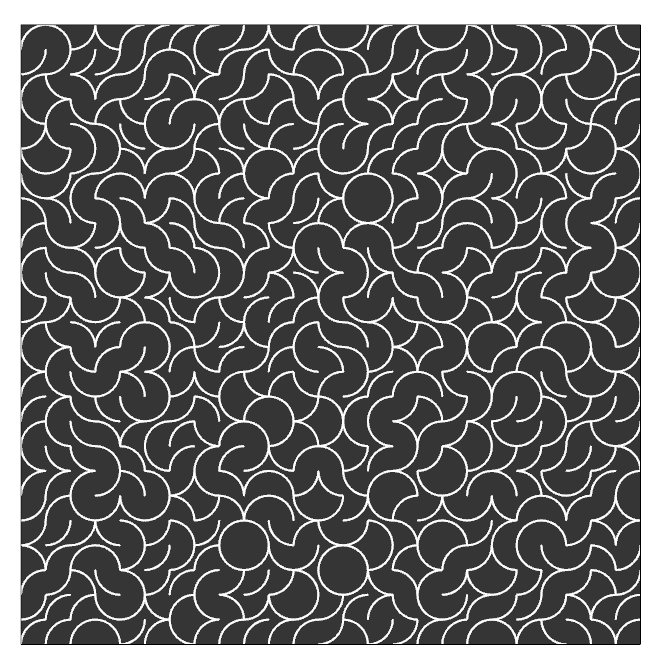
Complex Pattern from Simple Arcs – Example 3.6
Just to demonstrate one more time how complex patterns can be developed from very simple initial forms, we are going to do what we did in example 3.5 and do a Pick n’ Choose, this time with just one arc rotated in 1 of 4 directions. The results look quite good, in my opinion, even though its…
-
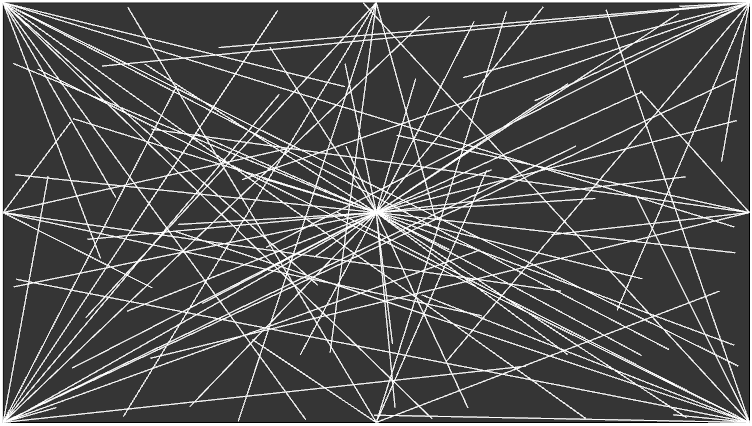
Procedural Art – Sol Lewitt – Example 3.1
One of the most influential and interesting artists of the 20th century, and one who has particular relevance to those interested in Generative Design is Sol Lewitt. At his core he was a minimalist, so much so that most of his famous pieces were not even executed by him in person. He did not sell…