Terrain
-

Using Curve Attractors and Graph Mapper to Modify Terrain
In this example, we will follow up on the logic of modifying terrain with point attractors and now modify the terrain along one or more linear pieces of curve geometry. We will be using much of the same logic, so if you are struggling with certain aspects it may be useful to attempt the previous…
-

Using Point Attractors and Graph Mappers to Modify Terrain
In the previous attractor examples, the focus was on creating 2D patterns with a linear distance falloff. Attractors can also be used to adjust geometry in 3D space, and the distance domain can be modified based on various functions to create more interesting and dynamic geometry. In this example, we will be using attractor logic…
-

Water runoff script – Example 8.6
In example 4.1 I mentioned a custom VB component I had used to analyze the flow of water across a surface. I recently tried to recreate this using the Anemone looping component to use with meshes (for various reasons) and it was actually very easy to do. The logic is similar in some ways to…
-

Agents on a Topographical Surface – Example 11.5
It’s been a while since I’ve posted any new content, but I decided to finally add a bit more about agents. This is actually something I started working on a while ago, and which I alluded to in Example 8.5, but it is a method to analyze a topographical surface to find potential corridors of…
-
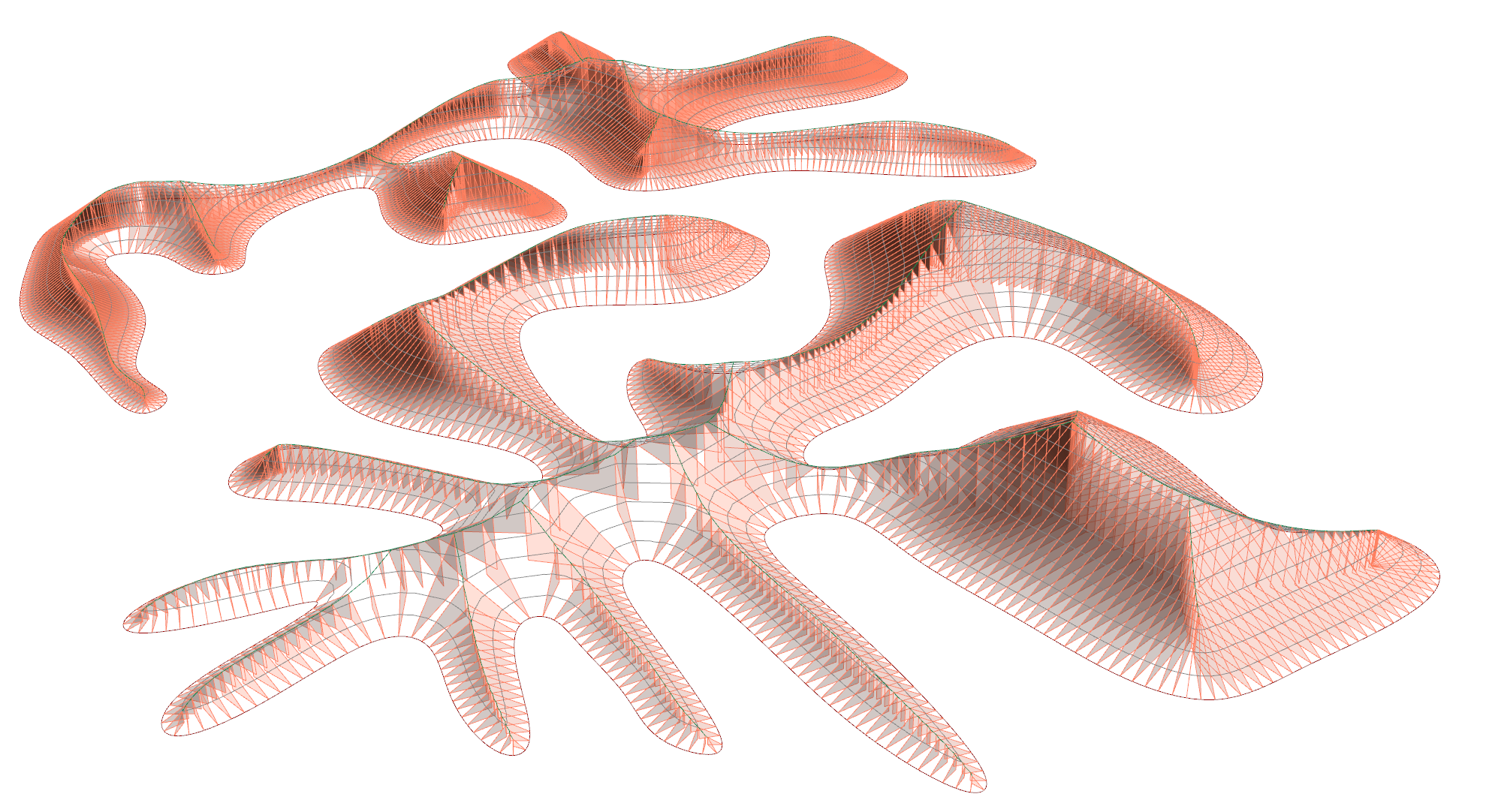
Landforms created through Topological Analysis of Shapes – Example 4.7
I wasn’t sure where to put this example exactly, since it came as a follow up to Example 8.4, but the general scripting is less complex so I decided to put it a bit earlier. The general problem and solution has many applications beyond topography as well, but for landscape architects, maybe its most ready…
-
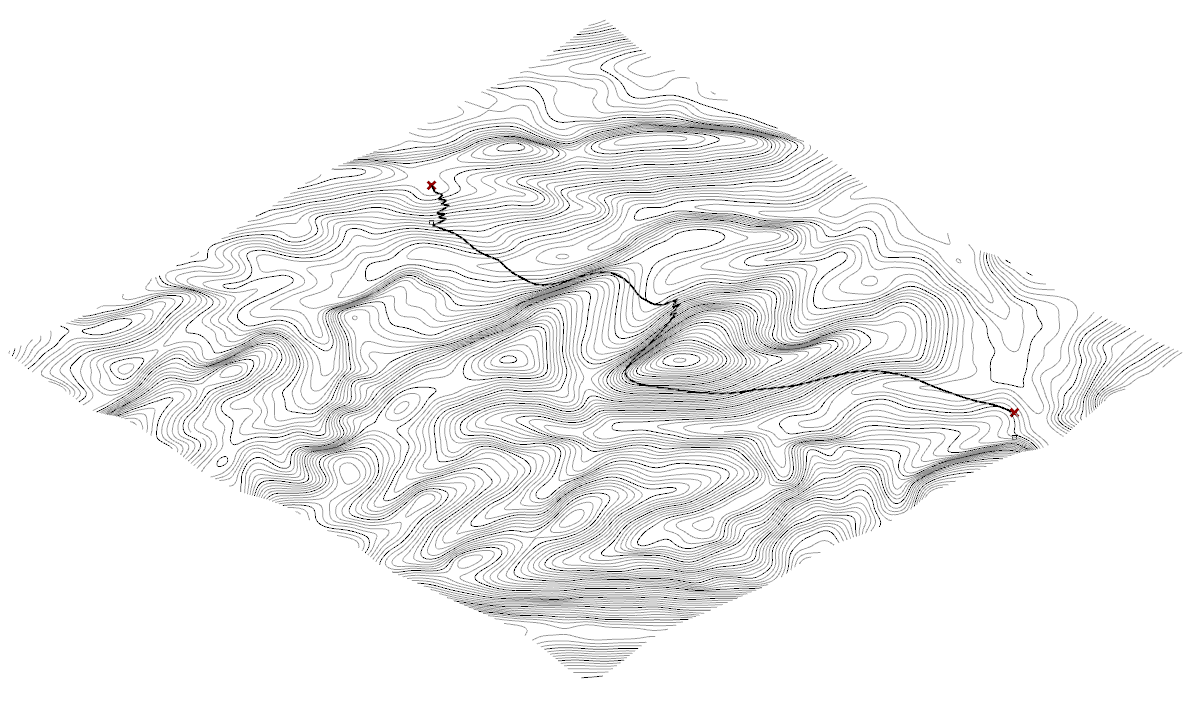
Path Finder using a Recursive Process – Example 8.5
A not uncommon task for Landscape designers is to draw paths through the landscape. If you are working on a “flat site” (something which doesn’t exist) or if you are just deciding to ignore topography completely, you can just draw the paths anywhere in any configuration you want. This will lead to problems. Anyone who…
-
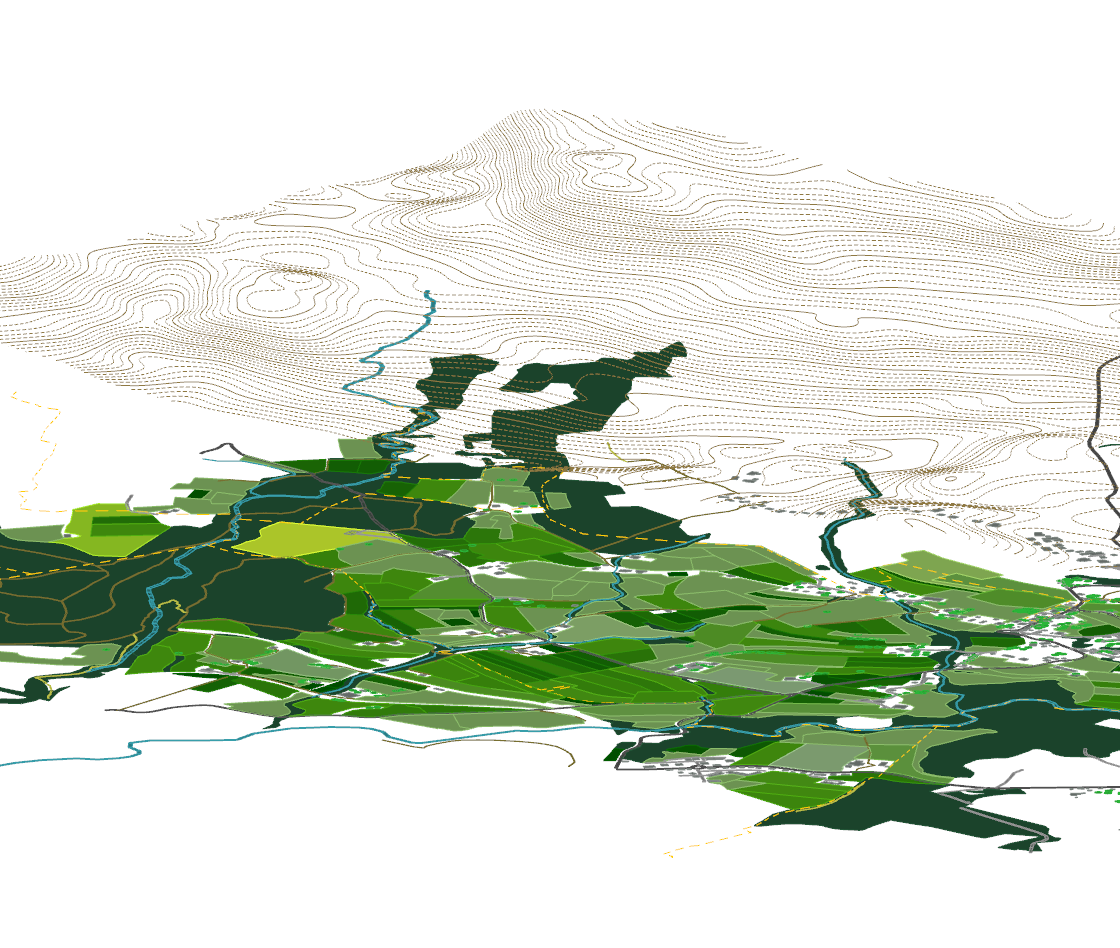
Adding Topography to the Site Model – Example 20.2
So you have a nice 2D document started and now you want to add some topography? Well, it is possible with Elk, and the process seems pretty straightforward at first, but unfortunately it is a little glitchy. There are ways to work around the glitches though, to generate a good base terrain for further steps…
-

Generating Fractal Terrain using the Midpoint Displacement Algorithm – Example 9.3
While not typically something used by landscape architects, many Computer Generated Landscape artists use procedural world generation software to create landscapes that have no basis in actual, real world landscapes, but can look astonishingly life-like. Employing the logic and algorithms of some of these “world creators” could be useful for landscape representation, and maybe even…
-
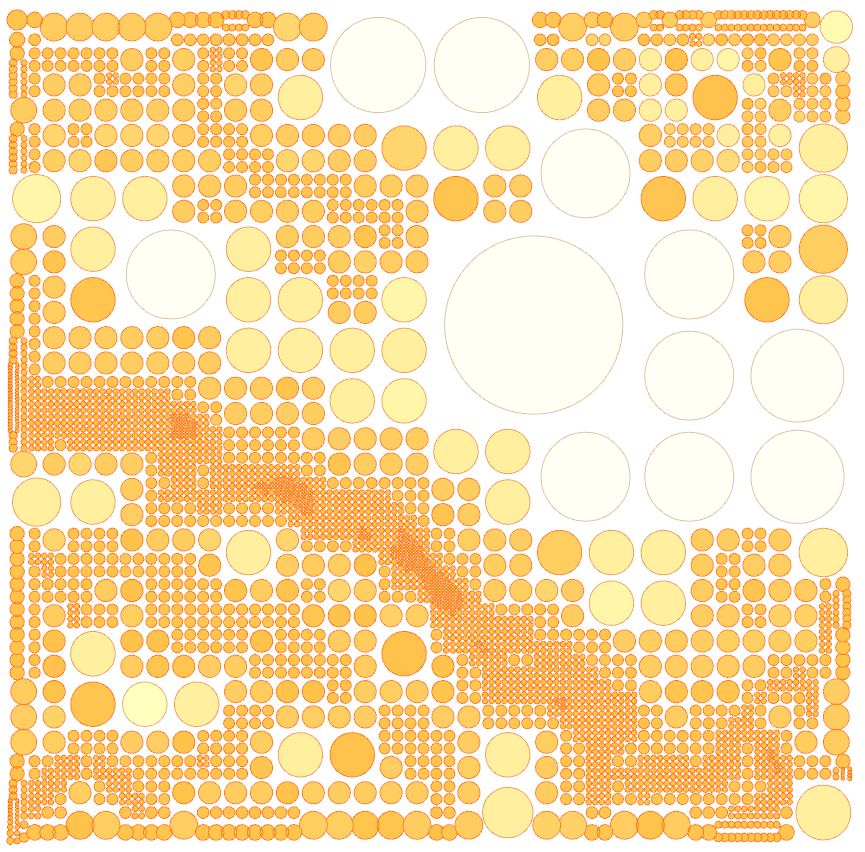
Recursive Subdivision of a Topographical Surface – Example 8.3
This example is partly regional analysis, partly trying to make cool images, and partly could have some practical applications. I’ve seen a few scripts floating around called “Recursive Subdivision of a Surface.” One example is on the website of co-de-it a computational group from Italy (*note as of 2025 this website is defunct…will find a new link), where…